Manchester Parish, Jamaica is one of the most distinctive parishes on the island, located in the south-central region within the county of Middlesex. Known for its cool climate, mountainous terrain, agricultural production, and growing communities, Manchester plays an important role in Jamaica’s economy and development.
Manchester is bordered by Clarendon to the east, Saint Elizabeth to the west, Trelawny to the north, and the Caribbean Sea to the south. As one of the 14 parishes of Jamaica, Manchester also forms part of the wider Caribbean region.
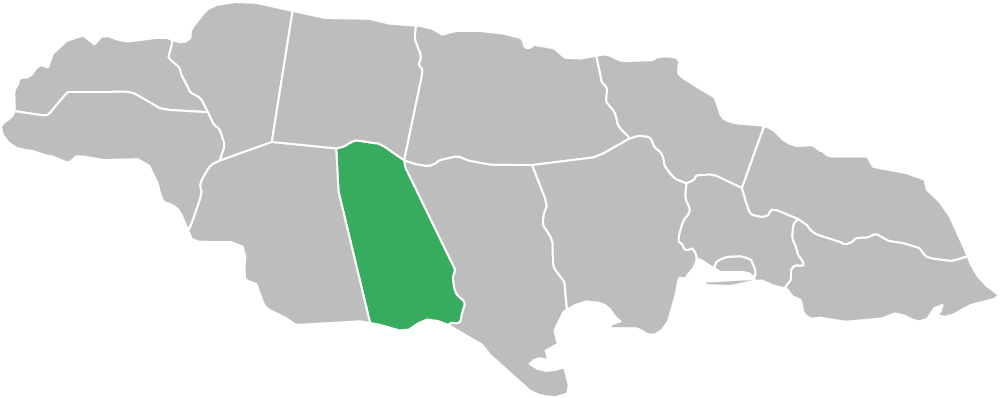
The parish is administered by the Manchester Municipal Corporation, which oversees local governance, infrastructure, and development.
Land Area: 827.8 sq km (319.6 sq mi)
Capital Town: Mandeville
Manchester was established on December 13, 1814 and named after the Duke of Manchester, who was then serving as Governor of Jamaica. The capital town, Mandeville, was named after his son and heir.
In the early nineteenth century, coffee farmers in the hills of Clarendon, Saint Elizabeth, and the former parish of Vere petitioned for the creation of a new parish to better serve their civic, judicial, religious, and administrative needs. After emancipation, many newly freed people moved into the area to cultivate coffee and other crops on hillside farms, helping to shape the character of the parish.
In 1942, Manchester was identified as the site of one of Jamaica’s largest deposits of bauxite. This discovery accelerated the growth of the parish and helped establish Manchester as an important center for both mining and agriculture in Jamaica.
The geography of Manchester Parish, Jamaica is dominated by hills and mountains, making it one of the most elevated parishes on the island. The parish features three main ranges: the Carpenters Mountains, the May Day Mountains, and the Don Figueroa Mountains.
The cooler climate, fertile soil, and upland landscapes support farming, rural communities, and settlement across the parish. Manchester’s central location also helps connect different parts of the island.
The economy of Manchester Parish, Jamaica is based largely on agriculture, mining, commerce, and services. The parish is well known for bauxite production, as well as farming activities involving coffee, citrus, and vegetables.
Manchester also contributes significantly to Jamaica’s commercial activity, with Mandeville serving as a major business, transportation, and service center in central Jamaica. Its combination of agriculture and mining continues to make the parish an important part of the national economy.
The major towns in Manchester Parish serve as important centers for commerce, transportation, and daily life across the region.
This section includes towns, villages, and local communities across Manchester Parish. These locations form the backbone of the parish’s population, agriculture, commerce, and local economy.
Manchester is one of the 14 parishes of Jamaica and is part of the wider Caribbean region. Its central location, mountainous terrain, and contributions to agriculture, mining, and commerce make it an important parish in Jamaica’s development.
Manchester is located in the south-central region of Jamaica, bordered by Clarendon, Saint Elizabeth, Trelawny, and the Caribbean Sea.
Manchester is known for its cool climate, mountainous landscape, agriculture, and bauxite mining.
The capital town of Manchester Parish is Mandeville.