Clarendon Parish, Jamaica is located in the southern section of Jamaica, roughly midway between the island’s eastern and western ends, within the county of Middlesex. Known for its fertile plains, agricultural communities, bauxite and alumina industries, historic towns, rivers, coastal districts, and central location, Clarendon is one of Jamaica’s largest and most economically important parishes.
Clarendon is bordered by Saint Catherine to the east, Manchester to the west, Saint Ann to the north, and the Caribbean Sea to the south. As one of the 14 parishes of Jamaica, Clarendon also forms part of the wider Caribbean region and includes major communities such as May Pen, Chapelton, Frankfield, and Lionel Town.
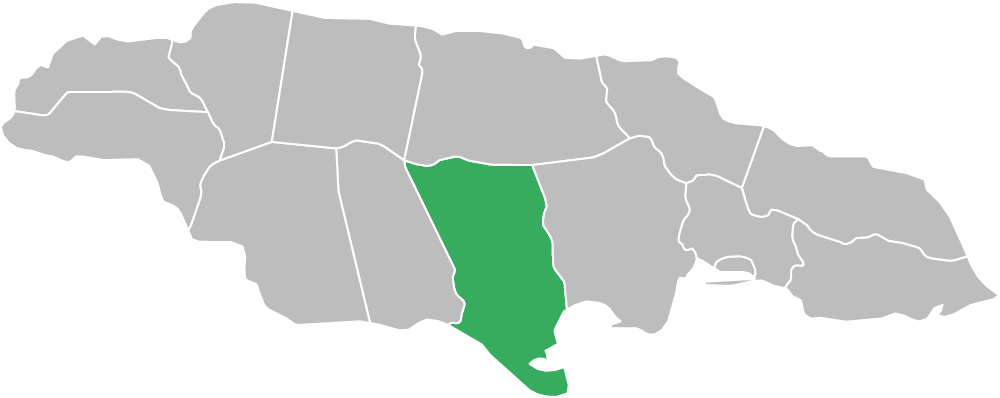
The parish is administered by the Clarendon Municipal Corporation, which oversees local governance, infrastructure, and development.
Land Area: 1,192.9 sq km (460.6 sq mi)
Capital Town: May Pen
Clarendon was named in honour of Sir Edward Hyde, Earl of Clarendon, who served as Lord Chancellor of England. The present parish was formed through the combination of the former parishes of Saint Dorothy, Vere, and the older parish of Clarendon. Before the merger, Chapelton served as the parish capital.
Long before the arrival of Europeans, the Taíno, Jamaica’s Indigenous people, lived in parts of the area now known as Clarendon. Archaeological evidence and historical accounts associate Taíno settlement with Portland Ridge, now commonly called Portland Point, as well as communities along the Rio Minho and Milk River.
During the colonial period, Clarendon developed around agriculture, estates, transportation routes, and market towns. Over time, May Pen grew into the parish’s main administrative and commercial centre, while communities such as Chapelton, Frankfield, and Lionel Town became important regional hubs.
The geography of Clarendon Parish, Jamaica includes mountains, river valleys, broad plains, wetlands, farming districts, and a long southern coastline. The northern section is more mountainous, while the central and southern areas include the fertile Vere Plains and other lowland agricultural zones.
The Rio Minho, Jamaica’s longest river, flows through the parish and has played an important role in settlement, agriculture, and local history. Clarendon also includes coastal and wetland areas around Portland Cottage, Rocky Point, Salt River, Jacksons Bay, and Portland Point.
The economy of Clarendon Parish, Jamaica is driven by agriculture, bauxite and alumina production, manufacturing, fishing, commerce, transport, and services. The parish is one of Jamaica’s major agricultural regions, producing crops and livestock across the Vere Plains and other farming districts.
Industrial and commercial activity is concentrated around May Pen, Hayes, Clarendon Park, and nearby communities. Coastal areas such as Rocky Point, Portland Cottage, and Jacksons Bay also support fishing and maritime livelihoods.
The major towns and places in Clarendon Parish serve as important centres for commerce, agriculture, transport, industry, fishing, and local life across the parish.
This section includes towns, villages, districts, and local communities across Clarendon Parish. These places form the backbone of the parish’s population, agriculture, industry, fishing, commerce, and local economy.
Clarendon is one of the 14 parishes of Jamaica and is part of the wider Caribbean region. Its combination of agriculture, industry, rivers, plains, historic towns, and coastal communities makes it one of the most diverse and economically important parishes on the island.
Clarendon is located in the southern section of Jamaica within Middlesex County. It is bordered by Saint Catherine, Manchester, Saint Ann, and the Caribbean Sea.
Clarendon is known for agriculture, the Vere Plains, the Rio Minho, bauxite and alumina production, May Pen, Milk River, and its southern coastal communities.
The capital town of Clarendon Parish is May Pen.