Portland Parish, Jamaica is located on the north-eastern tip of the island within the county of Surrey. Known for its rivers, beaches, mountains, and lush landscapes, Portland is one of the most scenic parishes in Jamaica and the wider Caribbean.
Portland is bordered by Saint Thomas and Saint Andrew to the south, Saint Mary to the west, and the Caribbean Sea to the north and north-east. The parish is widely known for its natural beauty, high rainfall, fertile lands, and strong connection to eco-tourism in Jamaica.
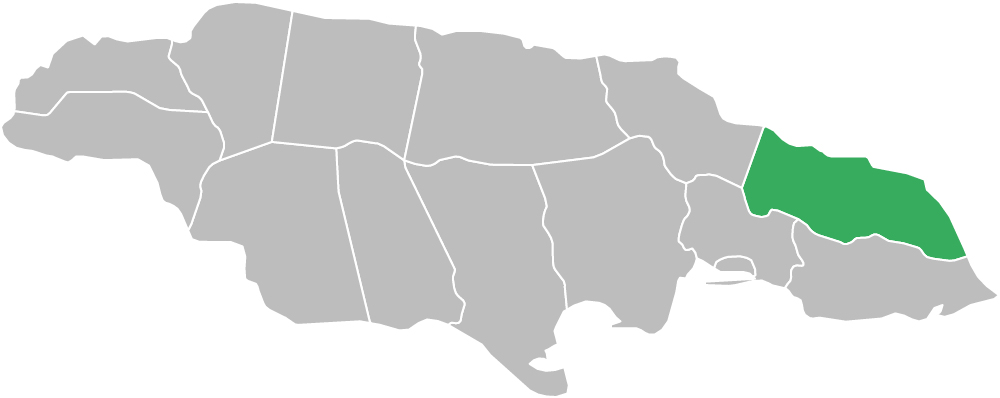
The parish is administered by the Portland Municipal Corporation, which oversees local governance and development.
Land Area: 813.9 km2 (314.3 sq mi)
Capital Town: Port Antonio
Portland was formed from the former parish of Saint George and part of Saint Thomas and was named after the Duke of Portland, who served as Governor of Jamaica between 1722 and 1726. The parish has a rich history linked to the Maroons and the Blue and John Crow Mountains.
During the 1730s, the British fought a series of battles against the Maroons in the area. The capture of Nanny Town became one of the most important events in the history of Portland and Jamaica, and Nanny of the Maroons later became Jamaica’s first National Heroine.
Portland also became known for its major contribution to Jamaica’s agricultural output, especially bananas, coconuts, and breadfruit, while Port Antonio grew into one of the parish’s most important commercial and shipping centers.
The geography of Portland Parish, Jamaica is defined by mountains, rivers, valleys, beaches, and caves. The parish receives high rainfall due to the north-east trade winds and the influence of the Blue Mountain and John Crow Mountain ranges.
Portland is home to some of Jamaica’s most famous natural attractions, including rivers flowing from the mountains, coastal bays, waterfalls, and lush tropical vegetation. This dramatic landscape helps make Portland one of the island’s top nature and eco-tourism destinations.
The economy of Portland Parish, Jamaica is supported by agriculture, tourism, fishing, and small-scale commerce. The parish is especially known for the cultivation of bananas, coconuts, breadfruit, and other crops for local and export markets.
Tourism also plays an important role, with visitors drawn to Portland for its beaches, waterfalls, lagoons, rafting experiences, and eco-tourism attractions. Areas such as Port Antonio and Buff Bay also support commercial and community activity within the parish.
The major towns in Portland Parish serve as important centers for tourism, commerce, transport, and community life across the region.
Portland is home to many natural, cultural, and historic attractions that help make it one of the most visited and admired parishes in Jamaica.
This section includes towns, villages, and communities across Portland Parish, forming the foundation of local life, agriculture, tourism, and economic activity.
Portland is one of the 14 parishes of Jamaica and is part of the wider Caribbean. Its natural beauty, agricultural strength, and tourism appeal make it one of the most important parishes in north-eastern Jamaica.
Portland is located on the north-eastern tip of Jamaica, bordered by Saint Thomas, Saint Andrew, and Saint Mary.
Portland is known for its beaches, rivers, waterfalls, mountains, and attractions such as Port Antonio, Reach Falls, and the Blue Lagoon.
The capital town of Portland Parish is Port Antonio.