Saint Elizabeth Parish, Jamaica (commonly abbreviated as St. Elizabeth or St Elizabeth) is one of the largest and most important parishes on the island, located in the south-western section of Jamaica within the county of Cornwall. Widely known as Jamaica’s Breadbasket (also called the Bread Basket Parish), Saint Elizabeth is renowned for its fertile farmland and agricultural production, supplying much of Jamaica’s fresh vegetables, fruits, and root crops. The parish is also known for its historic towns, coastal communities, Maroon heritage, diverse landscapes, and growing tourism industry.
Saint Elizabeth is bordered by Saint James and Trelawny to the north, Westmoreland to the west, Manchester to the east, and the Caribbean Sea to the south. As one of the 14 parishes of Jamaica, Saint Elizabeth also forms part of the wider Caribbean region and includes major communities such as Black River, Santa Cruz, Treasure Beach, and Malvern.
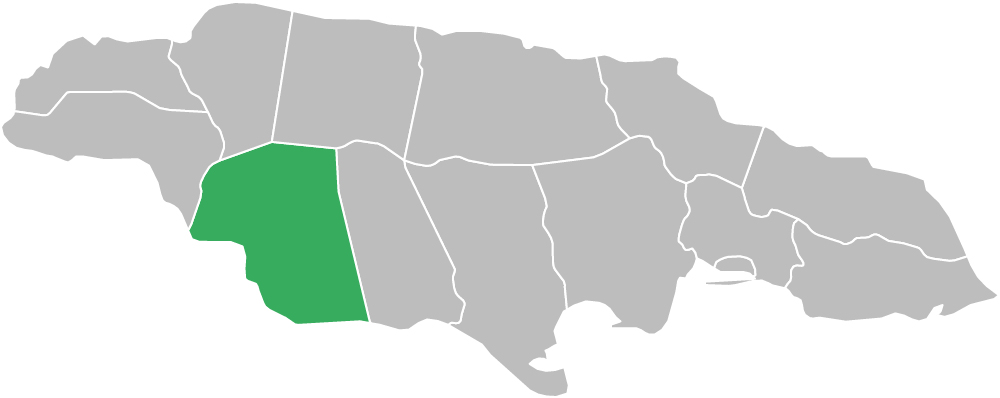
The parish is administered by the St. Elizabeth Municipal Corporation, which oversees local governance, infrastructure, and development.
Land Area: 1,210.7 sq km (467.5 sq mi)
Capital Town: Black River
Saint Elizabeth is one of the oldest parishes in Jamaica. Originally including much of the western section of the island, it was later divided to help form parts of Westmoreland and Manchester in 1703 and 1814 respectively. The parish was named in honour of Lady Elizabeth Modyford, wife of Sir Thomas Modyford, Governor of Jamaica between 1664 and 1671.
Early settlement in Saint Elizabeth began in the Pedro Plains, where the Taíno, the first known inhabitants of Jamaica, occupied the coastline. Though the original Taíno population declined by the 17th century, people of Taíno descent from Suriname later settled in the parish, and their descendants remain there today.
Saint Elizabeth is also closely linked to Maroon history. After the Spanish were defeated in 1655, enslaved Africans who did not flee retreated into difficult terrain that included parts of Saint Elizabeth. These communities later became associated with the Maroons, and the parish remains home to Accompong, one of Jamaica’s most famous Maroon towns.
The parish also played an important role in the Sam Sharpe Rebellion of 1831. Meanwhile, Black River became one of Jamaica’s oldest and most notable towns, known historically for fishing, social events, electricity, and early motor transport on the island.
The geography of Saint Elizabeth Parish, Jamaica includes mountains, plains, coastal districts, farming lands, and river systems. The north and north-eastern sections are mountainous, while broad plains extend across other parts of the parish. The Santa Cruz Mountain range crosses the plain from north to south and ends dramatically at the southern coast.
Saint Elizabeth is also known for its varied and beautiful landscape, from the Black River area and fishing coast to inland farming districts and upland towns such as Malvern and Santa Cruz. The parish’s diverse geography supports agriculture, fishing, eco-tourism, and community life.
The economy of Saint Elizabeth Parish, Jamaica is driven by agriculture, fishing, commerce, and tourism. Widely recognized as Jamaica’s Breadbasket, the parish is one of the country’s leading agricultural regions, supplying a significant share of Jamaica’s fresh vegetables, fruits, and root crops. Its fertile plains and favourable climate have made Saint Elizabeth one of the island’s most productive farming parishes.
The Black River supports shrimp and freshwater fishing, while coastal areas such as Treasure Beach contribute to tourism and hospitality. Commercial and community life is centered around towns such as Santa Cruz, Black River, Malvern, and Junction.
The major towns and places in Saint Elizabeth Parish serve as important centers for commerce, agriculture, transport, tourism, and local life across the parish.
The Cockpit Country is a large area of west-central Jamaica known for its distinctive karst limestone landscape, forest cover, and biodiversity. Although centered mainly in Trelawny, it extends into sections of Saint Elizabeth and contributes to the parish’s environmental importance.
This region includes one of Jamaica’s largest remaining wet limestone forests and supports exceptional plant diversity. Saint Elizabeth is also home to Accompong, one of the island’s most famous Maroon towns, giving the parish special cultural and historical significance.
This section includes towns, villages, districts, and local communities across Saint Elizabeth Parish. These places form the backbone of the parish’s population, agriculture, fishing, tourism, and local economy.
Saint Elizabeth is one of the 14 parishes of Jamaica and is part of the wider Caribbean region. Its combination of agriculture, Maroon heritage, fishing communities, coastal tourism, and diverse geography makes it one of the most distinctive parishes on the island.
Saint Elizabeth is located in the south-western section of Jamaica, bordered by Saint James, Trelawny, Westmoreland, Manchester, and the Caribbean Sea.
Saint Elizabeth is known for agriculture, Black River, Treasure Beach, Accompong, fishing, and its role as one of Jamaica’s main food-producing parishes.
The capital town of Saint Elizabeth Parish is Black River.