Saint Thomas Parish, Jamaica (commonly abbreviated as St. Thomas or St Thomas) is located at the south-eastern tip of Jamaica within the county of Surrey. Known for its mountains, valleys, rivers, coastal plains, historic sites, and strong cultural heritage, Saint Thomas is one of the most scenic and historically important parishes on the island.
Saint Thomas is bordered by Saint Andrew to the west, Portland to the north, and the Caribbean Sea to the south and east. As one of the 14 parishes of Jamaica, Saint Thomas also forms part of the wider Caribbean region.
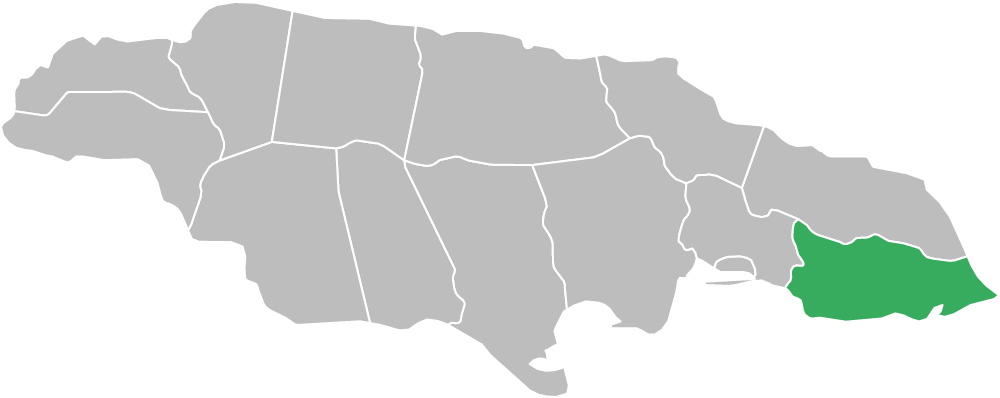
The parish is administered by the St. Thomas Municipal Corporation.
Land Area: 742.2 sq km
Capital Town: Morant Bay
Saint Thomas Parish, Jamaica has a rich and complex history that dates back to the indigenous Taíno people, who originally inhabited areas such as Yallahs and surrounding coastal regions. After the arrival of the Spanish in the late 15th century and later British colonization in 1655, the parish developed into an important agricultural area.
Saint Thomas is most widely known for the Morant Bay Rebellion of 1865, one of the most significant events in Jamaican history. The uprising was led by National Hero Paul Bogle and centered in Morant Bay. The rebellion highlighted social and economic injustices and ultimately led to major political reforms in Jamaica.
Key historic sites in the parish include Morant Bay, Stony Gut, and former plantation areas that reflect the island’s colonial past. Today, Saint Thomas remains an important part of Jamaica’s historical identity and cultural heritage.
The geography of Saint Thomas Parish, Jamaica is defined by its diverse landscape, which includes mountains, valleys, rivers, and coastal plains. The parish stretches from the eastern slopes of the Blue Mountains down to the Caribbean Sea, creating a mix of upland and coastal environments.
Inland areas such as Hagley Gap and surrounding districts are known for cooler climates and agricultural activity, while coastal communities such as Port Morant and White Horses are shaped by fishing and seaside living.
The parish also features rivers, fertile valleys, and scenic routes, making it one of the most naturally diverse regions in Jamaica. Its geography supports agriculture, tourism potential, and rural communities across the parish.
The economy of Saint Thomas Parish, Jamaica is primarily based on agriculture, fishing, and local commerce. Farming plays a central role in the parish, with crops such as bananas, sugarcane, and vegetables grown across rural communities.
Coastal areas support fishing industries, while towns such as Morant Bay, Yallahs, and Bath serve as key centers for trade, services, and daily economic activity.
Saint Thomas is also seeing gradual development in infrastructure and investment, positioning the parish for future growth while maintaining its agricultural roots and community-based economy.
Saint Thomas is one of the 14 parishes of Jamaica and is part of the Caribbean region. Its geography, history, and culture make it one of the most distinctive parishes on the island.
Saint Thomas is located in south-eastern Jamaica, bordered by Saint Andrew and Portland.
Saint Thomas is known for the Morant Bay Rebellion, historic landmarks, agriculture, and scenic coastal and mountain landscapes in Jamaica.
The capital of Saint Thomas Parish is Morant Bay.